

Step-by-Step Face Care Routine: Your Complete Guide to Healthy, Glowing Skin
Great skin isn’t luck — it’s the result of the right habits, done consistently.
Why a Face Care Routine Actually Matters
Most people wash their face and call it a day. However, your skin deals with a lot more than just surface-level dirt. In fact, pollution, UV rays, stress hormones, and blue light from screens quietly damage your skin barrier every single day.
Fortunately, a proper face care routine doesn’t have to be complicated or expensive. What it does need to be is consistent. Even a simple 3-step routine done daily will outperform an elaborate 10-step routine done once a week. In this guide, we walk you through everything — morning, night, and weekly treatments — so that you can build a routine that genuinely works for your skin.
Know Your Skin Type First
Before you buy a single product, it’s important to understand what kind of skin you’re working with. After all, using the wrong products for your skin type is one of the most common reasons routines fail.
- Normal Skin — Balanced moisture, no major concerns, minimal breakouts.
- Oily Skin — Excess shine, enlarged pores, prone to blackheads and acne.
- Dry Skin — Tight or flaky feeling, dull appearance, easily irritated.
- Combination Skin — Oily in the T-zone (forehead, nose, chin), dry on the cheeks.
- Sensitive Skin — Reacts easily to products, prone to redness or stinging.
Once you know your skin type, every product decision becomes much easier. So take a moment to figure this out before moving forward.
Morning Face Care Routine
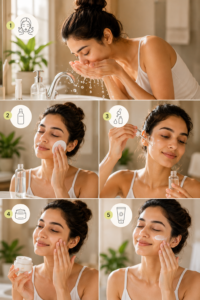
Your morning routine is primarily about protection — shielding your skin from the environmental stressors it will face throughout the day.
Step 1: Cleanse — Start with a Clean Base
First, begin every morning by washing your face. Even if you cleansed before bed, your skin produces oil and sheds dead cells overnight. Therefore, a gentle morning cleanse is always worthwhile.
How to do it right:
- Always wash your hands before touching your face.
- Use a gentle, sulfate-free cleanser that suits your skin type.
- Massage in small, circular motions for about 60 seconds.
- Rinse with lukewarm water — hot water strips your skin’s natural oils.
- Pat dry with a clean, soft towel. Never rub, as rubbing causes friction and irritation.
Product tips by skin type:
- Oily skin: Gel-based or foaming cleanser with salicylic acid
- Dry skin: Cream or milk-based hydrating cleanser
- Sensitive skin: Fragrance-free, minimal-ingredient cleanser
Step 2: Tone — Restore Balance
Toning is a step many people skip. However, it plays a genuinely useful role. After cleansing, your skin’s PH can be slightly disrupted. As a result, a good toner restores that balance, preps your skin to absorb the next products better, and addresses specific concerns depending on the formula.
How to apply:
- Pour a small amount onto a cotton pad and sweep gently across your face.
- Alternatively, pour it into your palms and press it into the skin.
What to look for: Rose water, niacinamide, green tea extract, or hyaluronic acid. On the other hand, avoid alcohol-heavy toners — they over-dry the skin and can make oiliness worse in the long run.
Step 3: Serum — Target Your Specific Concerns
Serums are concentrated formulas designed to address specific skin issues. Because they contain smaller molecules, they penetrate deeper than regular moisturizers. This makes them one of the most effective steps in any routine.
Popular serums and what they do:
- Vitamin C — Brightens skin, fades dark spots, and boosts collagen. Best used in the morning since it also adds an extra layer of antioxidant protection.
- Niacinamide — Controls oil, minimizes pores, and evens out skin tone over time.
- Hyaluronic Acid — Pulls moisture into the skin for deep, lasting hydration throughout the day.
How to apply: Use just 2–3 drops and gently press into the skin using your fingertips. Don’t rub — instead, tap lightly, as this helps absorption without pulling the skin.
Step 4: Moisturize — Lock in Hydration
Next, apply your moisturizer. It creates a protective layer over your skin that seals in everything from the previous steps and prevents water loss throughout the day. Even oily skin needs moisture — in fact, skipping this step often causes your skin to overcompensate by producing even more oil.
Choose the right texture:
- Oily skin: Lightweight gel or water-based, oil-free formula
- Dry skin: Rich cream with ceramides, shea butter, or squalane
- Combination/Normal: A balanced lotion or fluid moisturizer
For best results, apply while your skin is still slightly damp from the serum so it absorbs more effectively.
Step 5: Sunscreen — The Non-Negotiable Step
Finally — and most importantly — apply your sunscreen. This is hands-down the single most important product in any face care routine. UV rays don’t just cause sunburn. In addition, they accelerate skin aging, cause dark spots, break down collagen, and significantly increase the risk of skin cancer.
What to look for:
- Minimum SPF 30, ideally SPF 50+
- Broad spectrum protection (covers both UVA and UVB rays)
- Reapply every 2–3 hours if you’re spending time outdoors
Types of sunscreen:
- Chemical: Lightweight, absorbed into skin, great for everyday wear
- Mineral (Physical): Uses zinc oxide or titanium dioxide, sits on top of skin, and is generally better for sensitive skin
Yes, you need sunscreen even on cloudy days and even indoors near windows. No exceptions.
Night Face Care Routine

Nighttime is when your skin shifts into repair mode — cell turnover speeds up, collagen production increases, and recovery happens at a cellular level. Therefore, use this window wisely.
Step 1: Double Cleanse — Remove Everything
If you’ve worn sunscreen, makeup, or been outdoors all day, a single cleanse simply won’t fully remove everything. That’s why double cleansing ensures your skin is truly clean before repair mode begins.
- First cleanse: Use a cleansing oil or micellar water to dissolve sunscreen and makeup.
- Second cleanse: Follow up with your regular face wash to clean the skin itself.
Step 2: Tone
Just as in the morning, use your toner to rebalance and prep your skin for the next steps.
Step 3: Treatment Serum or Active Ingredient
At night, it’s the ideal time to use more powerful ingredients that work best during your skin’s natural repair cycle:
- Retinol — The gold standard for anti-aging. It speeds up cell turnover, reduces fine lines, and fades dark spots. If you’re new to it, start with a low concentration 2–3 nights per week and gradually increase as your skin builds tolerance.
- AHA (Glycolic or Lactic Acid) — Exfoliates dead cells on the surface, ultimately revealing smoother, brighter skin underneath.
- BHA (Salicylic Acid) — Penetrates deep into pores, reduces acne, and clears blackheads. Especially great for oily or acne-prone skin.
- Peptides — Support collagen production and overall skin firmness over time.
Important note: Don’t use retinol and Vitamin C together in the same routine — it can cause unnecessary irritation. Instead, use Vitamin C in the morning and retinol at night.
Step 4: Eye Cream (Optional but Worth It)
The skin around your eyes is the thinnest on your entire face and, as a result, it shows signs of aging and fatigue the fastest. If dark circles, puffiness, or fine lines are a concern, apply a small amount of eye cream using your ring finger. This finger applies the gentlest pressure, so it’s the safest one to use around this delicate area.
Step 5: Night Moisturizer or Sleeping Mask
Finally, finish with a heavier moisturizer or overnight sleeping mask. These products work while you sleep to deeply hydrate, soothe, and restore your skin barrier. By morning, you’ll notice your skin looks noticeably more plump and refreshed.
Weekly Skin Care Additions
Exfoliation — 1 to 2 Times a Week
Regular exfoliation removes the buildup of dead skin cells that makes skin look dull and blocks your products from being fully absorbed.
- Physical exfoliant: A gentle scrub works well — however, avoid harsh beads that can cause micro-tears in the skin.
- Chemical exfoliant: AHA or BHA acids dissolve dead skin cells more evenly and are generally more effective than physical scrubs.
That said, don’t over-exfoliate. More is not better here — in fact, too much exfoliation strips your skin barrier and leads to increased sensitivity.
Face Masks — Once a Week
Choose a mask based specifically on what your skin needs that week:
- Clay mask: Draws out impurities and controls oil — ideal for oily or acne-prone skin
- Sheet mask: Delivers a concentrated burst of hydration — great for dry or dull skin
- Brightening mask: Targets uneven tone and lingering dark spots
Lifestyle Habits That Support Your Routine
Your skincare products can only do so much. What goes on inside your body, however, shows up directly on your face.
- Hydration: Drink at least 8 glasses of water daily. Dehydrated skin looks dull, tired, and is far more prone to fine lines.
- Sleep: 7–8 hours of quality sleep isn’t a luxury — it’s when your skin carries out its most important repair work. Consistently poor sleep visibly ages your skin over time.
- Diet: Foods rich in antioxidants (berries, leafy greens), healthy fats (avocado, nuts, salmon), and essential vitamins directly improve your skin’s texture and natural glow.
- Stress management: Elevated cortisol from chronic stress directly triggers breakouts and inflammation. Consequently, regular exercise, meditation, or even a short daily walk can make a visible difference.
- Clean pillowcase: Change it at least once a week. Otherwise, your pillowcase collects bacteria, oil, and product residue — all of which transfer back to your skin every night.
- Hands off your face: Touching your face throughout the day transfers bacteria and causes breakouts. Therefore, make it a conscious habit to stop.
Common Mistakes to Avoid
- Using too many products at once — Introducing several new products simultaneously makes it impossible to identify what’s helping or hurting your skin. Instead, add one new product at a time and wait at least two weeks before introducing another.
- Popping pimples — It pushes bacteria deeper, worsens inflammation, and often leaves behind scars that take months to fade.
- Skipping sunscreen on cloudy days — Up to 80% of UV rays pass through clouds. Therefore, sunscreen is non-negotiable, regardless of the weather.
- Expecting overnight results — Most skincare products need at least 4–6 weeks of consistent use before you see visible results. Patience, as a result, is a key part of the process.
- Over-exfoliating — Using harsh scrubs too often damages your skin barrier, causes redness, and makes your skin more reactive to everything else in your routine.
Final Thoughts: Keep It Simple, Stay Consistent
You don’t need a 12-step routine or a cabinet full of luxury products to have healthy, glowing skin. Instead, what you need is the right basics — chosen for your specific skin type — used consistently every single day.
If you’re just starting out, begin with three steps: a cleanser, a moisturizer, and a sunscreen in the morning. Then, as your skin adjusts, gradually add more steps over time. Most importantly, listen to your skin — it will tell you what it needs.
The best face care routine, ultimately, is the one you’ll actually stick to. Build the habit, be patient with the process, and your skin will reward you for it.
Found this guide helpful? Share it with someone who’s ready to start their skin care journey. Got questions about your specific skin concerns? Drop them in the comments below!